

Explore Islam
Life and Mission of the Prophet ﷺ
Muhammad ﷺ is considered in Islam as the seal of the Prophets – the last Messenger of God. Here’s a short story of his life and mission.
From humble beginnings
Prophet Muhammad ﷺ was born in Mecca, a busy trade hub in the heart of the Arabian Peninsula, in about 570. He belonged to the influential local Quraish tribe.
He became an orphan at an early age. His father died before his birth and his mother when he was six years old. After that, Muhammad ﷺ grew up with his grandfather and after his grandfather’s death his uncle looked after him.
In his early childhood, Muhammad ﷺ lived some years outside Makkah with the Bedouins. The Makkans used to send their children to Bedouins into a healthy environment where they could learn pure Arabic and original Arab culture.
Honest and trustworthy
As a young man, Muhammad ﷺ worked as a shepherd. He was appreciated for his noble characteristics. He became known as ‘As-Sadiq’ and ‘Al-Amin’ – honest and trustworthy.
Later on, wealthy Makkan businesswoman Khadija employed him as a merchant. He travelled between Syria and Makkah handling lady Khadija’s business affairs. During his travels Muhammad ﷺ became acquainted with different places and people. He learned to negotiate.
So impressed was Khadija of the conduct and character of Muhammad ﷺ that she decided to propose. Khadija was a widow and according to some estimate 15 years older than the Prophet, who was 25 years at the time. He accepted her proposal and they went on to have four daughters and two boys, but both of them died young.
Beginning of Prophethood
The Prophet used to often retrieve away from the hustle and bustle of the busy Makkah to meditate and reflect. His favourite spot was a cave on top of a mountain overlooking Makkah.
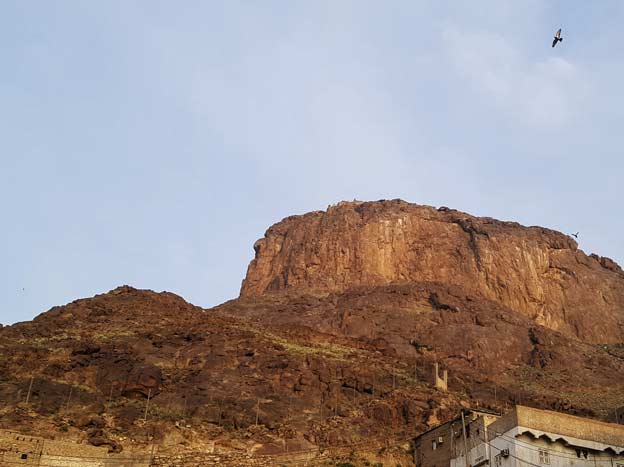
The mountain outside Makkah, where Archangel Jibril first appeared to Prophet Muhammed ﷺ.
One day when Muhammad ﷺ was meditating, he had an extraordinary experience. The magnificent archangel Gabriel appeared to him and commanded: “Read!”
The Prophet ﷺ was illiterate, which was common at that time, so he responded by saying he couldn’t read. Here’s what happened next, according to Muhammad’s ﷺ own account:
“I cannot read,” I replied and the angel pressed me until I was anxious. Then he let me down and repeated: “Read!” “I cannot read”, I replied, and the angel pressed me again until I was anxious. Then he let me out and said, “Read!” “I cannot read”, I replied, and the angel pressed me for the third time until I was anxious. Then he let me down and repeated: “Recite: in the Name of your Lord Who created, created man from clots of blood. Recite: And your Lord is the Most Generous, He who taught by the pen, taught man what he did not know.”
At the age of 40, circa 610 AD, Muhammad ﷺ had received the first revelation from God, as recorded in chapter 96 of the Qur’an, Surah Al-‘Alaq, the Clot. Listen here for the recitation of these first verses (verses 1-5).
Challenging tribalism
Muhammad ﷺ was fearful. He returned shaking to his home where his wife Khadija covered him. She listened to her husband’s experience and reassured him. She believed her husband had received a mission from God and became his first follower.
As the revelations through Archangel Gabriel gradually continued, Muhammad ﷺ realised that he had received an important mission: to call humanity to worship One God. First the Prophet ﷺ began to spread the message of the revelations to his close relatives, but soon his message would spread wider.
The Prophet’s ﷺ central message was, that there was only one God that people should recognise and worship. This peaceful surrender to God was called Islam.
In addition to the Oneness of God, the core of his message was social justice and the equality of men and women before God. All were to be respected and taken care of equally. Muhammad ﷺ emphasized in particular the orphans, the poor and the underprivileged.
Islam created a new loyalty to God first at the expense of old tribal systems. This challenged the social norms of the time. Makkah at the time was full of idols. This made for lucrative business, as people would flow in to worship these idols from many parts of Arabia.
Muhammad’s ﷺ message raised suspicion and resistance, especially amongst the powerful of Makkah, some of whom were his own relatives. Trouble started brewing. The ruling elite were not prepared to give up their positions of power, their old gods and tribal ways. They plotted and planned to end his mission.
Hijra to Medina
The opposition the Prophet ﷺ and his early followers faced in Makkah soon became extremely hostile. Remaining in Makkah became unbearable.
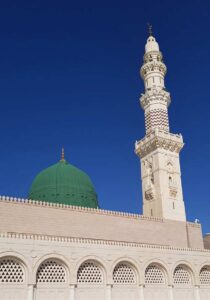
The dome and minaret of the Prophet’s ﷺ mosque in Medina. The dome marks the site where the Prophet ﷺ is buried.
A move to Yathrib was planned, a city north of Makkah, where the message of the Prophet ﷺ had been positively received.
The name of Yathrib was changed to Medina, or The City of the Prophet. This move to Medina in 622 is called Hijra and it marks the beginning of the Islamic calendar and a new era in the life of the first Muslims.
In Medina, the Prophet ﷺ founded the first Muslim community. Old tribal divisions and customs lost their significance. A new brotherhood of man was created that was based on faith.
He ﷺ established first the mosque and then the marketplace, where trading was free and governed by the laws of Islam. Riba, usury, was forbidden.
Muhammad ﷺ freed slaves and gave them honourable roles. Bilal, a black slave who had embraced Islam earlier in Makkah defying his worldly master, became the first muezzin, caller to prayer.
In Medina, the rules of the Islamic community were gradually evolving. Muhammad ﷺ made agreements with Medina’s Jewish community.
Return to Makkah
While life in Medina was better, the struggle to establish a new Muslim community was far from over. Over the following years the nascent Islamic community came under a series of attacks from surrounding tribes including the Makkans, who continued to see them as a threat.
After defying many odds and outlasting the onslaught against his community of believers in many battles, in 630 the Prophet ﷺ approached Makkah for pilgrimage. The Makkans no longer sought to fight Muhammad ﷺ and the Prophet ﷺ peacefully entered the city with his companions. He forgave the people of Makkah for all the years of oppression. Many of them turned to Islam recognising his ﷺ prophethood.
He then went on to cleanse the local sanctuary called the Kaaba from all the idols and sanctified it to God as a place of prayer and pilgrimage. Since then, the Kaaba has been a sacred place for Muslims.
The Prophet’s ﷺ death
The Prophet’s ﷺ mission was now complete. He died in 632 in Medina at the age of 63 years. Before his death, he gave a final sermon to his followers.
The final guidance for humanity he left behind is the Qur’an and his example. The various phases and actions of his life are known through detailed historical recordings. Many of his sayings are documented in so called hadith literature.
In just 23 years Muhammad ﷺ had united all the Arab tribes through the message of Islam. His message began to spread further across the Middle East – and beyond.
“There is no God but Allah, and Muhammad is His Messenger.”
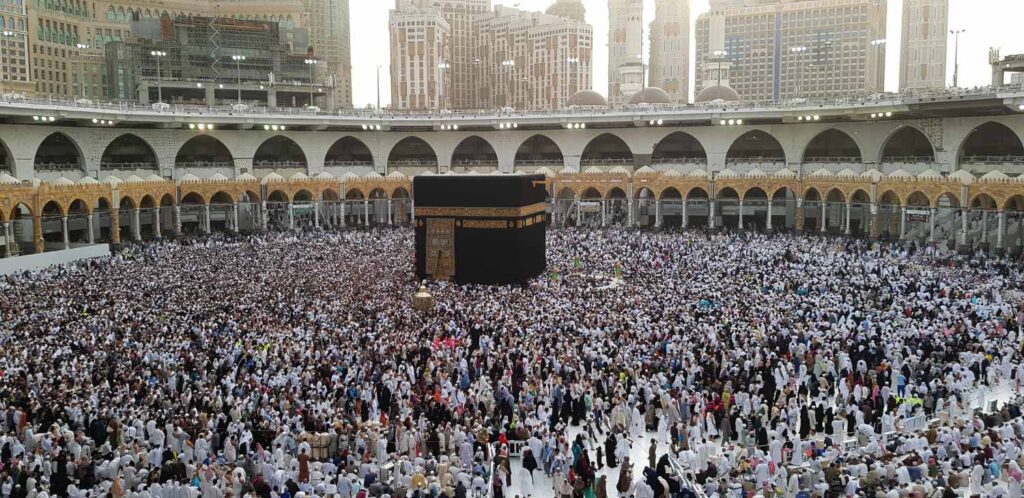
Pilgrims performing ‘tawaf’ , circumambulation, around the Kaaba, the house of God in Makkah was built by Prophet Abraham and his son Ishmael, peace and blessings to them both.
Learn more
For questions about Islam or arranging a mosque visit, please contact Turku Islamic Society.
Learn more

