

Explore Islam
Five Pillars of Islam
Once the Prophet ﷺ was asked about Islam and faith. He replied:
”Islam is testifying, that there is no other justified to be worshipped, except Allah and that Muhammed is His Messenger; practising regular prayer and paying Zakat, fasting during the month of Ramadan and performing Hajj (pilgrimage), if one is able to.”
The practice of Islam is based on these five pillars.
1. Shahada: testimony of faith
The cornerstones of the testimony of faith in Islam are sincere faith in the Oneness of God and believing in Muhammad ﷺ, peace be upon him, as the final Prophet.
The testimony of faith, known as the ‘shahada’, should be said in the presence of a witness. It goes:
“I bear witness that there is no god but God and Muhammad is His Messenger”.
2. Salah: prayer
Prayer is the second pillar of Islam. Every capable Muslim should perform five daily prayers as their daily workout for the mind, the body and the soul.
Before the prayer, worshippers purify by washing the hands, the face, the head and the feet with clean water. Prophet Muhammad ﷺ said:
“The key to Paradise is prayer – and the key to prayer is ablution.”
Prayer consists of a series of movements, during which parts of the Quran are recited and certain prescribed prayers are made. In the end prayers of peace are offered to Prophet Abraham and his family.
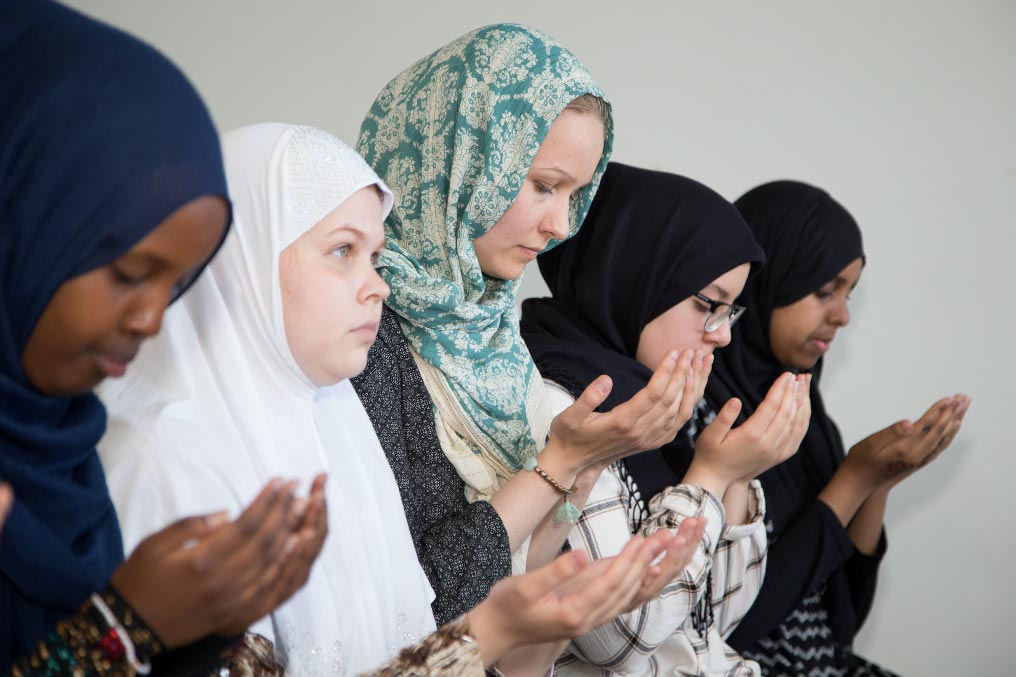
Women offering prayers in the Turku mosque.
Prayer is regular remembrance (dhikr) of God. It is about praising God, asking for guidance and cleansing of the mind and soul from sins and of earthly sorrows.
There are also exceptions to the daily prayer obligation. For example, women are freed from the daily prayer obligation for the duration menstruation and while bleeding after birth. During longer travel prayers can be shortened and combined.
3. Zakat: annual payment
Zakat, annual tax on wealth, is the second pillar. Islam obliges every Muslim to donate 2.5% of the year’s savings to the disadvantaged, for debt relief, for the suffering, or to help people on God’s path.
Paying Zakat cleanses one’s wealth. It helps to get rid of selfishness and greed. It also benefits society at large by helping to spread welfare.
Zakat is to be taken, not given, and distributed to the needy, with priority being those locally.
In addition to the compulsory Zakat payment, giving charity – known as sadaqa – in general is highly emphasised in Islam. The Prophet Muhammad ﷺ famously said:
“Charity does not decrease wealth”.
The spiritual truth of Islam is that God gives more wealth to a person who gives charity. What goes around comes around as the saying goes.
4. Ramadan: month of fasting
The ninth month of the Islamic calendar is a sacred month called Ramadan. During Ramadan every Muslim should fast from sunrise to sunset as long as there are no medical barriers.
Women are exempt from fasting during menstruation and post birth bleeding. Also the timetable itself can see some alterations in the polar circles due to local times for sunrise and sunset.
In addition to abstaining from drink and food, Muslims should also refrain from all bad actions, bad speech and thought. Effort should be made to replace these vices by good deeds and charity during Ramadan.
The purpose of Ramadan is to reform oneself, cleanse and to light up the soul. The ultimate goal is to create God consciousness, as stated in the Qur’an (2:183):
“O you who believe! Fasting is prescribed for you as it was prescribed for those before you, so that you may attain God consciousness.”
Ramadan is also the month of Qur’an. It is the time when many Muslims aim to complete reciting the Holy book from cover to cover.
5. Hajj: pilgrimage
Pilgrimage to Mecca is the fifth pillar of Islam. Every capable Muslim should perform pilgrimage once in their lifetime, if he or she has the means and the health to do so. Hajj takes places during Dhul Hijjah which is the twelfth month of the Islamic lunar calendar.
Pilgrimage is performed to the house of Allah in Makkah, called the Kaaba. The Qur’an (2:125) describes how Allah ordered Prophet Abraham and his son Ishmael, peace be upon them both, to establish the Kaaba as a house of worship:
We charged Abraham and Ishmael: “Purify My House for those who circulate around it and who stay there for worship to bow and prostrate.”
The Hajj is filled with deep symbolism. Many rituals enacted during the pilgrimage are done remembering trials faced by Prophet Abraham and his family.
The Hajj brings together millions of pilgrims from all walks of life and from all corners of the world. It is a magnificent display of human diversity yet unity at the same time. The pilgrims are all coming together to worship One God leaving their worldly status’ behind them. In front of God, they are all equal.
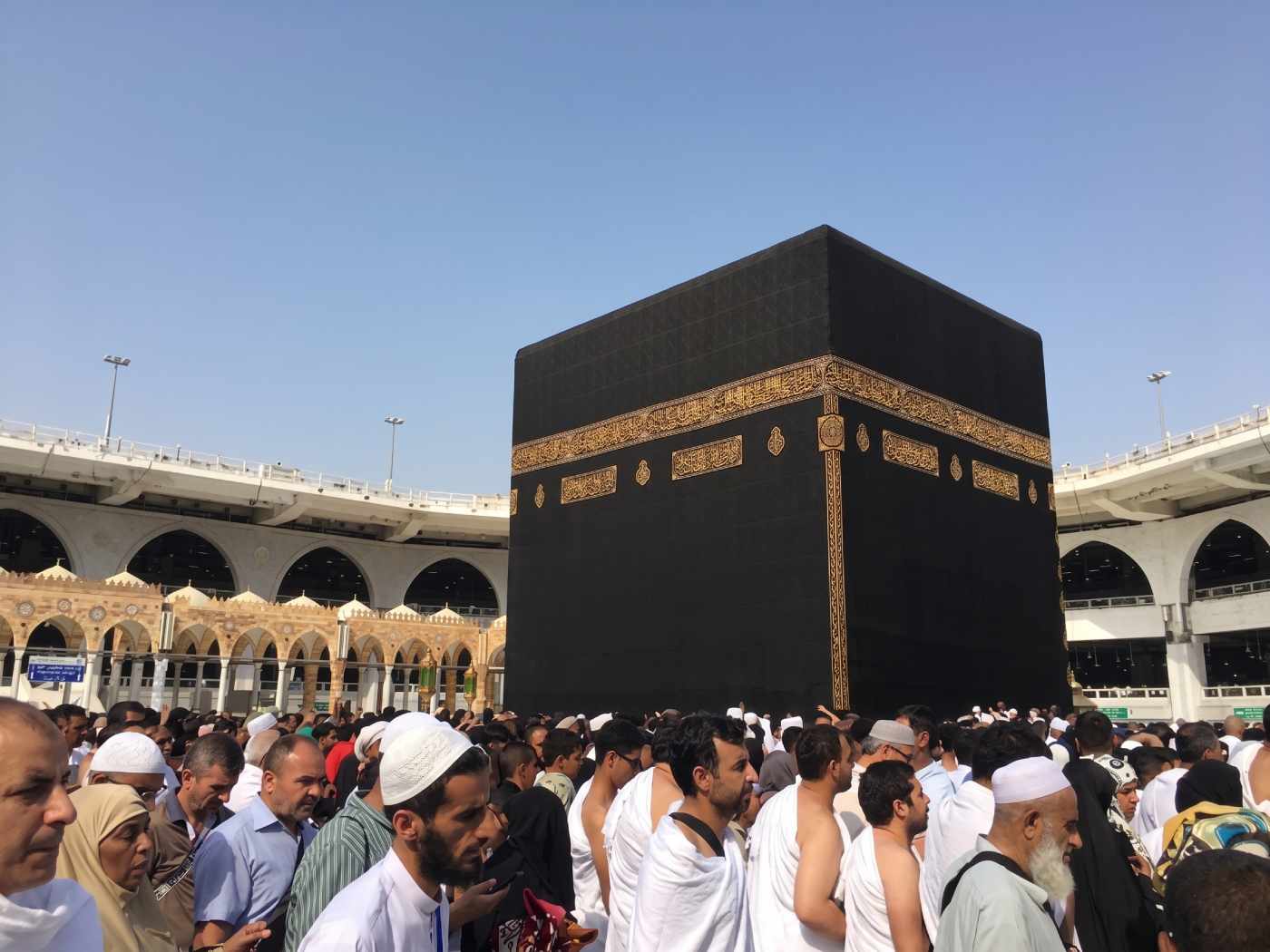
Pilgrims in Mecca doing ‘tawaf’ – circumambulation around the Kaaba.
The most important day of the pilgrimage is called the Day of Arafat. This is when all the pilgrims gather outside Makkah on the plains of Arafat making supplications all day long.
It is said that the Day of Arafat is a reminder of the Day of Judgement, when mankind will be gathered in front of Allah to be taken into account for their deeds.
Learn more
For questions about Islam or arranging a mosque visit, please contact Turku Islamic Society.
Learn more

